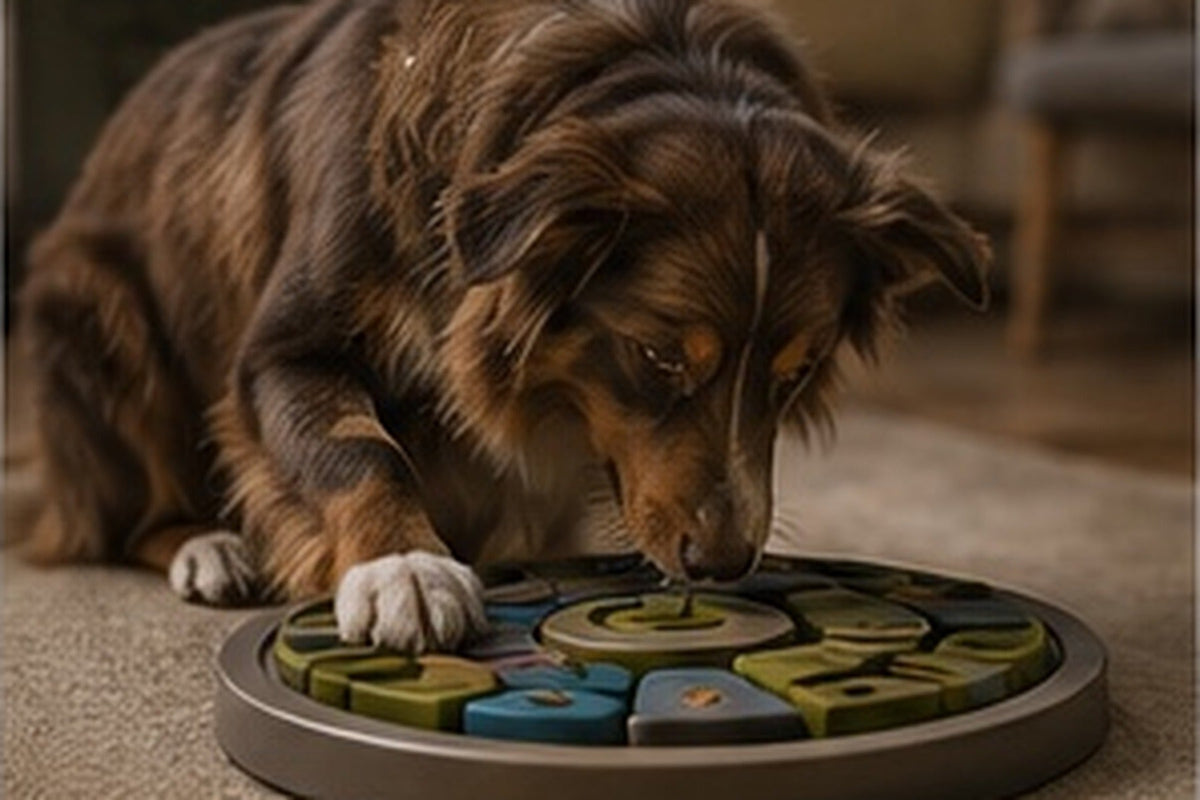
Understanding Pet Enrichment and Why It Matters
Enrichment refers to the ways a pet's environment and daily routine can support their natural behaviours and overall wellbeing, beyond simply meeting their basic needs. It covers several distinct categories, mental, physical, sensory, social and feeding, and understanding the difference helps owners provide a more genuinely rounded environment for their pet. This guide sets out what each category means in practice, with examples suited to dogs and cats.
At a glance
- Enrichment covers five broad categories: mental, physical, sensory, social and feeding.
- Different pets benefit from different balances of enrichment depending on species, age and temperament.
- Simple, low-cost changes to routine often provide as much value as dedicated products.
- Enrichment supports natural behaviours rather than replacing the need for basic care.
- A sudden change in a pet's engagement with enrichment can be worth mentioning to your veterinarian.
Mental enrichment
Mental enrichment involves activities that encourage problem-solving or engage a pet's natural curiosity. Puzzle feeders, scent-based games, and training sessions that introduce new cues or tricks all fall into this category. For dogs, short training sessions using positive reinforcement can provide meaningful mental engagement alongside the practical benefit of reinforcing good manners. For cats, hiding small amounts of food around a room to encourage searching behaviour is a simple way to introduce mental stimulation.
Physical enrichment
Physical enrichment relates to opportunities for movement and activity suited to a pet's individual capability. This might include regular walks and off-lead exercise where appropriate for dogs, or climbing opportunities and interactive play sessions for cats. The right level and type of physical activity varies considerably by age, breed and health status; a young, active dog has very different needs to an older dog with mobility considerations, and your veterinarian can offer guidance where health factors are relevant.
Adjusting for age and mobility
As pets age, physical enrichment often needs to shift toward gentler, shorter activities rather than being reduced altogether, since some level of movement generally remains valuable throughout a pet's life.
Sensory enrichment
Sensory enrichment engages a pet's senses of smell, sight, hearing or touch in ways that go beyond their everyday environment. For dogs, this might include scent trails or sniffing walks, where the pace is slowed to allow more exploration. For cats, safe access to a window with an outdoor view, or textured surfaces to explore, can provide meaningful sensory variety within an indoor environment.
Social enrichment
Social enrichment relates to a pet's opportunities for positive interaction, whether with people, other pets, or, where appropriate, other animals. Not every pet is equally social, and needs vary considerably by individual temperament; some dogs thrive on regular interaction with other dogs, while others are more comfortable with limited social exposure. Respecting an individual pet's social preferences is as important as providing opportunities for interaction.
Feeding enrichment
Feeding enrichment involves making mealtime more engaging than a simple bowl of food, for example through puzzle feeders, slow-feed bowls, or scattering food to encourage natural foraging behaviour. This can be particularly useful for pets that eat quickly, or those who benefit from additional mental stimulation during the day. Any significant change to feeding method is worth introducing gradually, and dietary questions are best directed to your veterinarian.
Common mistakes to avoid
- Focusing on only one category of enrichment, such as physical exercise, while overlooking mental or sensory needs.
- Introducing enrichment activities that do not suit an individual pet's temperament or comfort level.
- Assuming enrichment needs remain constant throughout a pet's life rather than adjusting for age and health.
- Overwhelming a pet with too many new activities at once rather than introducing them gradually.
- Treating enrichment as optional rather than a genuine contributor to overall wellbeing.
Conclusion
A well-rounded approach to enrichment, covering mental, physical, sensory, social and feeding needs, supports a pet's natural behaviours and contributes meaningfully to their day-to-day wellbeing. If you notice a sudden change in how your pet engages with activities they previously enjoyed, this is worth discussing with your veterinarian, as it can sometimes indicate an underlying health or wellbeing concern.
Ready to shop? Browse our Toys & Enrichment collection for products designed to support mental and physical enrichment.
Frequently asked questions
What is the easiest type of enrichment to start with?
Feeding enrichment, such as scattering food or using a simple puzzle feeder, is often an easy and low-cost starting point for most pets.
Do cats need as much enrichment as dogs?
Cats benefit from enrichment just as much as dogs, though the specific types, such as sensory and feeding enrichment, are often more relevant than the physical exercise commonly associated with dogs.
How much enrichment does an older pet need?
Older pets generally still benefit from enrichment, though the type and intensity often needs to shift toward gentler, shorter activities suited to their current mobility and energy levels.
Can too much enrichment be a problem?
Introducing too many new activities at once can be overwhelming for some pets; a gradual approach, observing how your pet responds, tends to work better.
Is enrichment necessary for indoor-only cats?
Yes, indoor-only cats generally benefit particularly from enrichment, since their environment offers fewer natural opportunities for stimulation compared with cats with outdoor access.