Article: Talking to Children About the Death of a Pet
Talking to Children About the Death of a Pet
For many children, a pet is the first death they experience, and how it is handled tends to be remembered for a long time. Parents often delay the conversation, or soften it so heavily that the child misunderstands what has happened. This guide covers what generally helps: using clear language, answering the questions actually asked, allowing a child to take part in remembering, and knowing when to seek additional support.
At a glance
- Plain words work better than euphemisms; phrases like put to sleep are frequently misunderstood by young children.
- Tell them soon, and tell them yourself, rather than letting them work it out.
- Answer the question asked, then stop. Children take information in stages.
- Including a child in a memorial gives grief something to do.
- Reactions vary enormously by age and by child, and an apparently unbothered reaction is normal.
Use plain language, even though it feels harsh
The instinct is to soften it. Unfortunately, the softest phrases are the ones that cause the most confusion. A young child told the dog was put to sleep may become frightened of going to bed, or may wait for the dog to wake up. Told the cat was lost, they may believe she is findable and that nobody is looking properly. Told she went away, they may conclude she chose to leave, or that people who go away do not come back.
Using the words died and dead sounds blunt to an adult ear, but it is clearer, and clarity is kinder here. Something like: Bella died this morning. Her body stopped working and it cannot be fixed. She is not coming back, and it is not because of anything you did.
The last sentence matters
Children commonly assume a private responsibility for events at home. A child who was cross with the dog that week, or who forgot to fill the water bowl once, may quietly connect the two. Saying explicitly that it was not their fault, without waiting to be asked, is worth doing.
Tell them soon, and tell them yourself
Children generally sense that something is wrong, and a delay leaves them managing the atmosphere without information. Hearing it from a parent, in ordinary surroundings and with time afterwards, is easier than overhearing it or learning it at school. Choose a moment where nothing has to happen next.
Answer what is asked, then stop
Children process a death in fragments, often across weeks. They may ask one question, appear satisfied, go and play, then return two days later with something much harder. This is normal and does not mean the first answer failed.
Questions about the body, about burial or cremation, and about whether it hurt are common and are worth answering honestly at a level suited to their age. If a question does not have an answer you are certain of, saying you do not know is better than improvising something you may have to correct later.
Different ages, different reactions
Very young children often do not grasp that death is permanent, and may ask repeatedly when the pet is coming back. Repetition is not defiance; the concept is genuinely still forming. Older children may grasp the permanence fully and be preoccupied with fairness, or with whether it will happen to other members of the household. Teenagers frequently grieve privately, and an apparently flat reaction can conceal a great deal.
A child who seems unaffected is not necessarily unaffected, and a child who cries once and then plays is not being callous. Both are within the normal range.
Let them take part in remembering
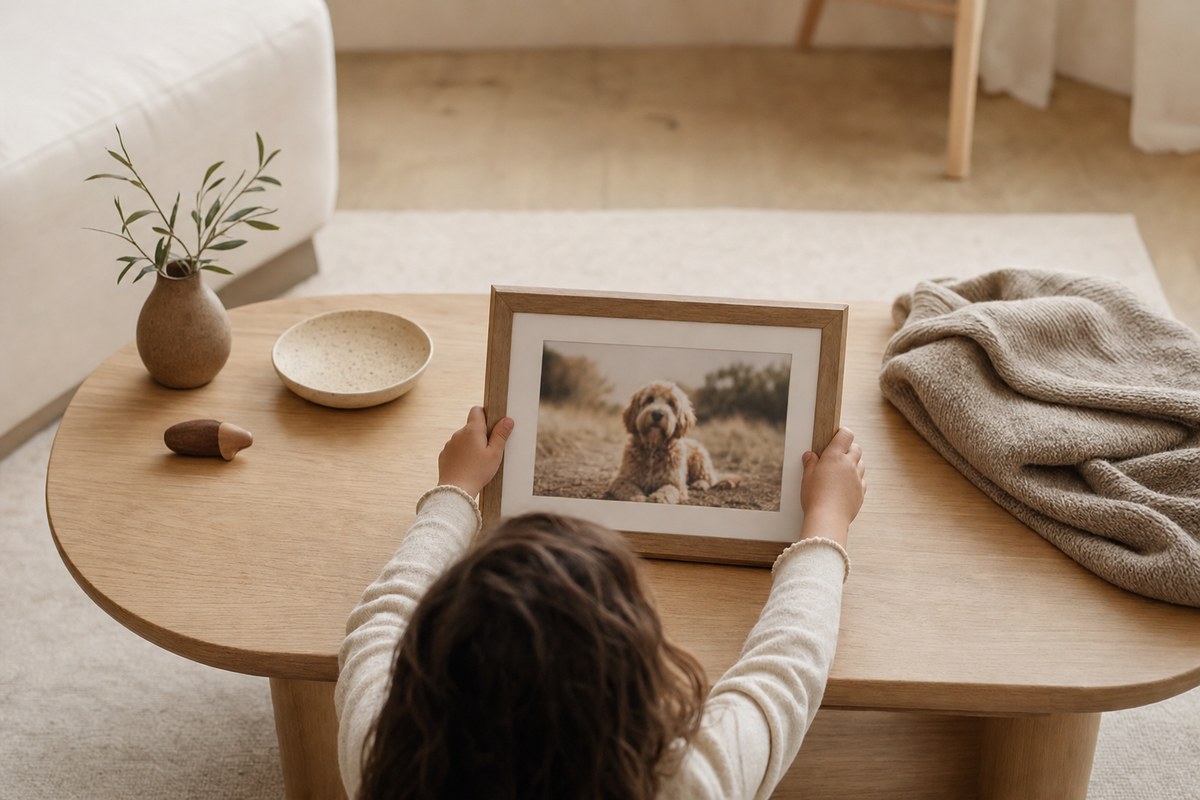
Grief in children often settles more easily when it has something to do. Practical, achievable involvement tends to help more than being protected from the subject: choosing a photograph to frame, drawing the pet, writing something to keep, helping pick where a keepsake or memorial piece will sit, or being present when ashes are placed or scattered.
Being asked, rather than told, is the important part. A child who does not want to attend should not have to, and a child who wants to be involved usually benefits from being allowed to.
Things worth avoiding
- Euphemisms such as put to sleep, lost, or went away, which are commonly taken literally.
- Replacing the pet quickly in the hope of skipping the grief.
- Telling a child not to be sad, or that it was only an animal.
- Assuming a quiet child is fine, or that a child who returns to play has finished grieving.
- Excluding a child from remembering because it might upset them.
Conclusion
Honest, simple language and a willingness to keep answering questions over time tend to serve children better than protection from the subject. If a child's distress continues at a level that worries you, or begins affecting sleep, school or eating, it is worth speaking with your general practitioner or a qualified child counsellor. Organisations including Grief Australia and GriefLine publish guidance on supporting children through the loss of a pet, and your veterinary clinic can often point to local support as well.
Frequently asked questions
Should a child be present when a pet is put down?
There is no single right answer, and it depends on the child, their age and their wishes. Your veterinarian can advise on what is practical in your circumstances, and a child who is asked and declines should not be pressed.
Is it better to say the pet was put to sleep?
Generally no, particularly with younger children, who may take it literally and become anxious about sleep. Died is clearer and causes fewer misunderstandings.
Should we get another pet straight away?
Most guidance suggests not rushing. A new animal introduced quickly can be experienced as a replacement, and can complicate rather than shorten a child's grief.
My child does not seem upset at all. Is that a problem?
Not usually. Children grieve unevenly and often privately, and a delayed or muted reaction is within the normal range.
How can a child be involved in a memorial?
Choosing a photograph, making a drawing, writing something to keep, or helping decide where a keepsake sits are all achievable and give a child a role in remembering.